
Back to School Letter Matching Puzzles
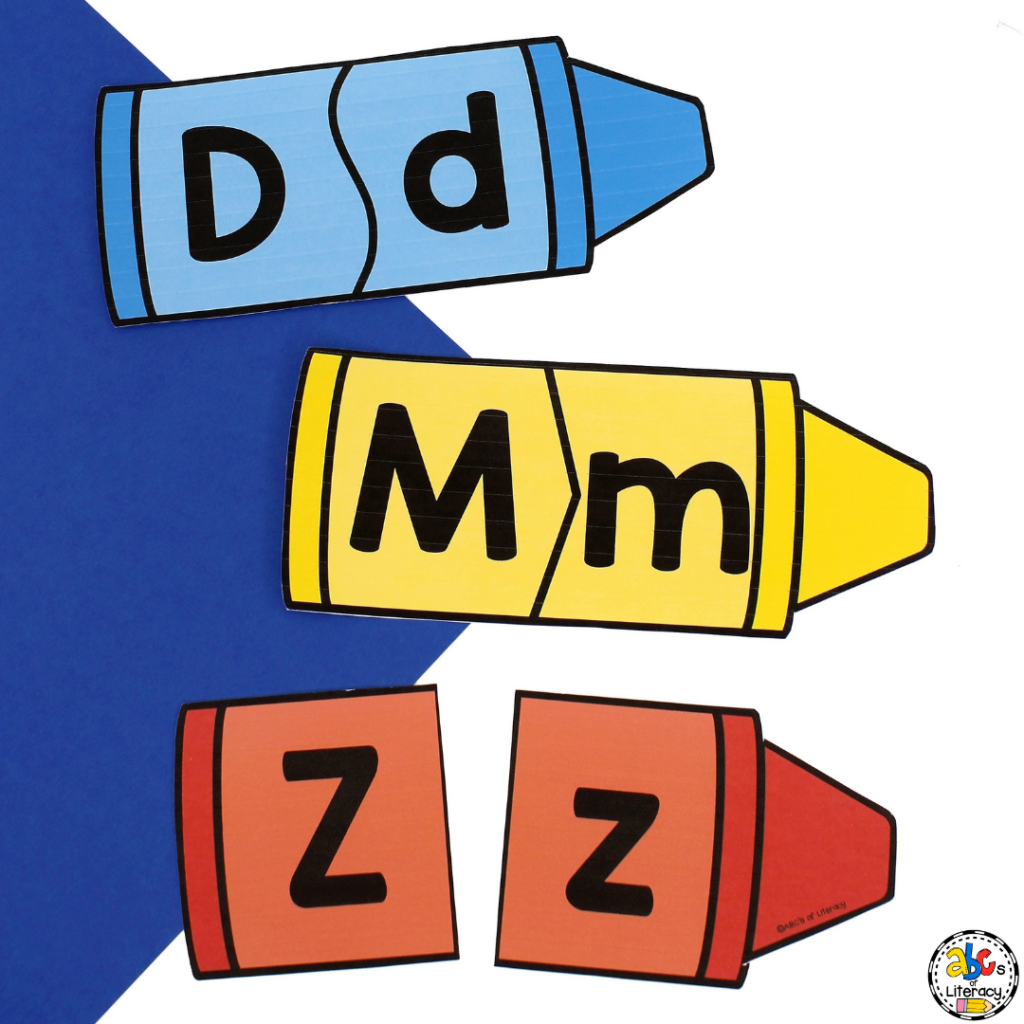
Are you looking for an engaging alphabet activity for the beginning of the school year? These Back to School Letter Matching Puzzles are just what you need!
Your preschoolers and kindergartners will love learning the ABCs as they practice matching capital to lowercase letters in this hands-on activity.
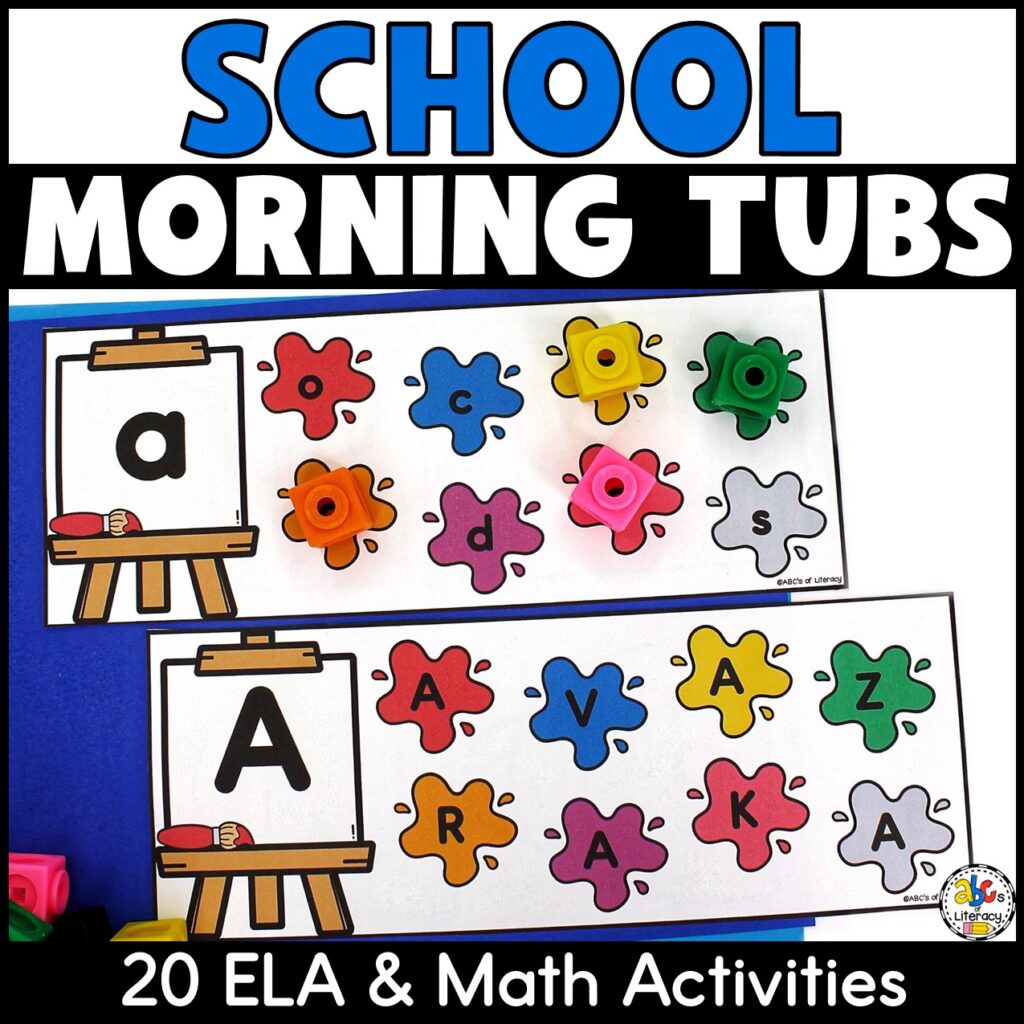
This freebie is part of the Back to School Morning Tubs for Preschool!

These crayon letter matching puzzles are one of my favorite morning tubs to use at the beginning of the year, because they’re low-prep, easy to use, and make learning fun.
You can also use them when you are working with students one-on-one, in small groups, or setting up independent early finisher bins. This activity checks all the boxes:
✅ Focuses on capital and lowercase letter recognition
✅ Encourages fine motor skills as kids manipulate the puzzle pieces
✅ Fits in perfectly with your Back to School theme
✅ Requires little prep — just print, laminate, and cut!
What Skills Will Students Practice?
Letter matching puzzles do far more than keep early learners busy — they build the foundational skills every child needs before they can read. Here’s what makes them such a powerful part of the ABCs of literacy.
Letter Recognition
Before children can decode words, they need to recognize what each letter looks like — in both its uppercase and lowercase form. That’s 52 distinct shapes to internalize! Alphabet matching puzzles give kids repeated, low-pressure practice identifying each letter and connecting it to its pair. The more times they see and handle each letter, the more automatic recognition becomes.
Visual Discrimination
Matching capital “A” to lowercase “a” requires a child to study shapes, sizes, and subtle differences. That skill — noticing that “b” and “d” or “p” and “q” are not the same thing — is called visual discrimination, and it’s one of the core building blocks of reading. Alphabet match puzzles naturally develop this skill every time a child sorts through pieces to find the right fit.
Fine Motor Development
Every time a student picks up a puzzle piece, turns it, and puts it into place, they’re strengthening the small muscles in their hands and building hand-eye coordination. Those same muscles are exactly what children need when they begin holding a pencil and forming letters on paper.
Self-Checking Independence
Because the puzzle pieces only fit together one correct way, students get immediate feedback without needing a teacher to check their work. They find and fix their own mistakes independently — which builds real confidence. This is what makes alphabet matching puzzles such a strong choice for centers, morning tubs, and any other time you need students productively working on their own.
Getting Ready to Use the Back to School Letter Puzzles:
This post may contain affiliate links. Please read our disclosure here.
What’s Included:
- 26 Crayon Letter Matching Puzzles
What Else Is Needed:
- White Card Stock
- Scissors
- Laminator
- Laminating Sheets
To get this letter recognition activity ready for your students to use, fill out the form at the bottom of this page.
After receiving the email with the resource attached, download and print the puzzles on white card stock.
Then, laminate the puzzles and cut them apart. You can store them in a plastic container or pouch.
How to Use the Back to School Alphabet Puzzles:
For this back to school activity, your students will pick a puzzle piece and identify the capital letter on it.
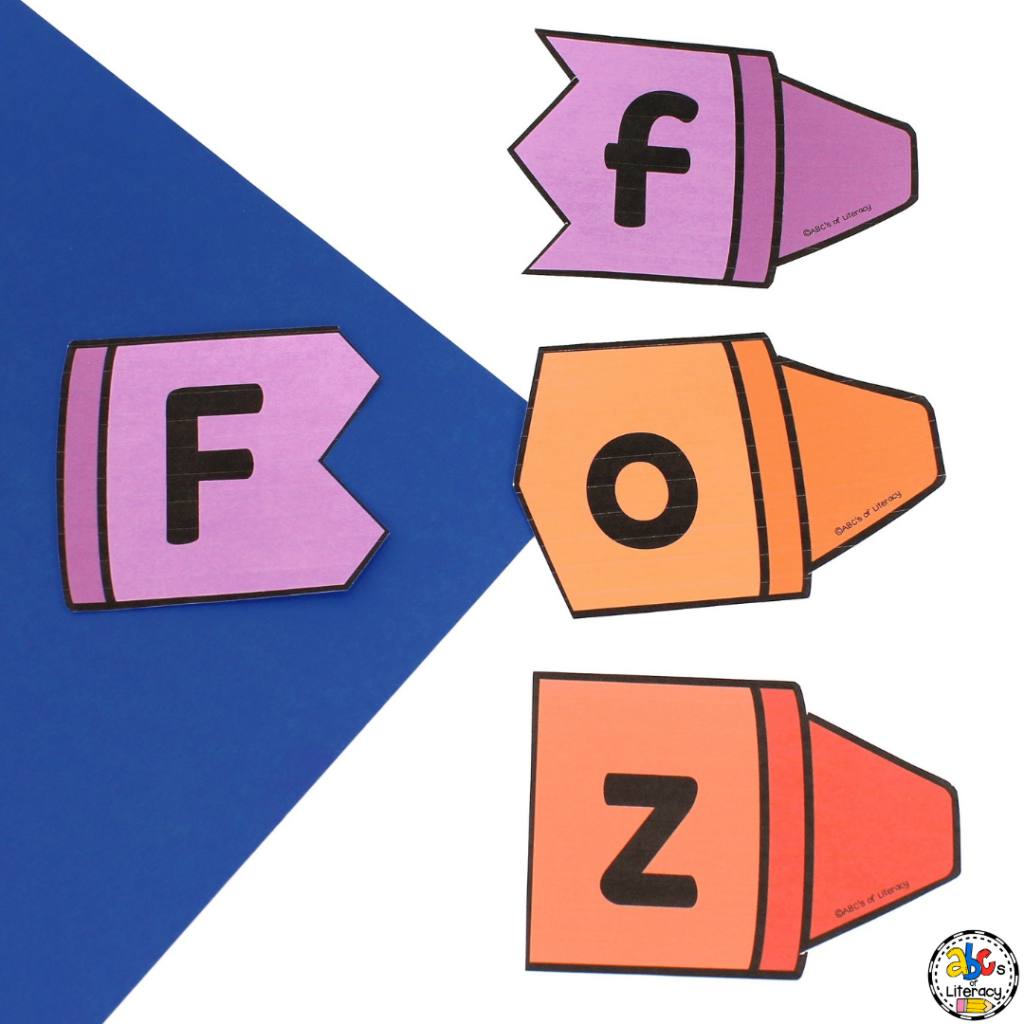
Next, they will sort through the other pieces to find the matching lowercase letter.
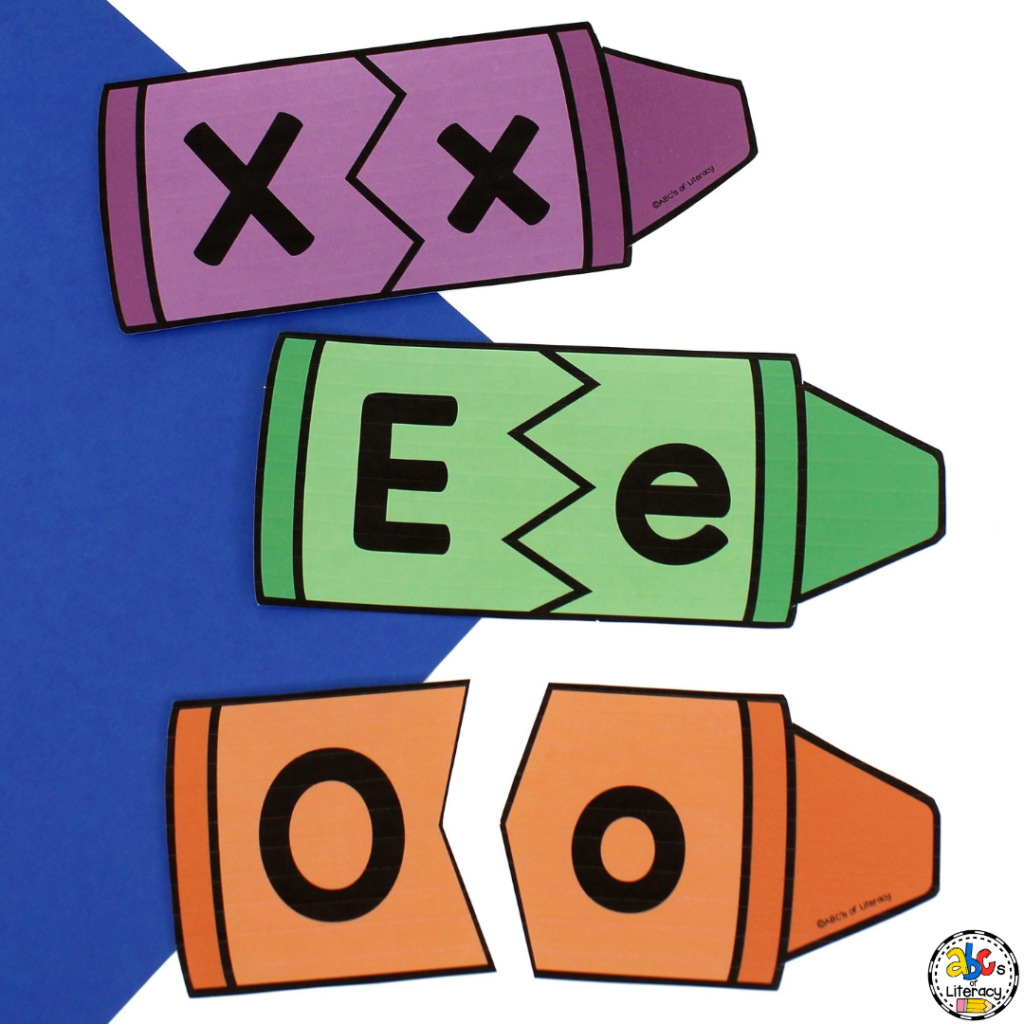
Your kids will then put the two puzzle pieces together to create a colorful crayon.
Tips for Using the Back to School Letter Puzzles:
Introduce to students. Before adding the puzzles to centers or morning tubs, model the activity as a whole group: pick up a capital letter piece, name it, and search for the matching lowercase piece.
Add them to your rotation. Plan to cycle the puzzles into your morning tubs regularly — not just once. They can be used throughout the entire school year. Repetition is what turns recognition from effortful to automatic.
Differentiate with intention. Students arrive at very different points in their alphabet journey. For children who already know most letters, add a sorting challenge: after matching, group the pairs by vowels vs. consonants, or by straight-line letters vs. curved ones. For students who need more scaffolding, work with a reduced set of 5–10 pairs in a small group.
Follow the seasons. When you’re ready for a fresh look, the Fall Letter Matching Cards carry the same uppercase-to-lowercase matching skill right into an apple-themed autumn activity — a perfect transition once back-to-school season wraps up.
Explore the full bundle. These puzzles are one activity from the larger Back to School Morning Tubs for Preschool set. The full bundle includes hands-on literacy and math activities to fill your entire morning tub rotation for the start of the year.

More Ways to Use These Back to School Letter Puzzles:
One of the best things about these puzzles is how many different settings they fit into:
- Morning tubs — a no-fuss independent literacy warm-up from the moment students walk in
- Alphabet centers — ideal for the first weeks of school when letter recognition is the priority focus
- Small group instruction — great for targeted practice with students who need extra support
- Early finisher task boxes — always on hand so students have something meaningful to do
- Family literacy at home — a simple activity parents can set up on the kitchen table with no extra prep
Frequently Asked Questions:
What age are these letter matching puzzles for? These puzzles are designed for preschool and kindergarten students, roughly ages 3–6. They’re ideal for children who are beginning to explore the alphabet and need consistent, hands-on practice distinguishing capital and lowercase letter forms.
Do students need to already know the alphabet to use these? Not at all! Alphabet match puzzles are a great way to introduce letters, not just review ones students already know. The hands-on process of sorting and matching is part of how children learn. Pairing the puzzles with a classroom alphabet display or a daily ABC song gives students helpful scaffolding while they work.
What’s the best way to store the pieces? Keep each puzzle pair together in a small labeled zip bag, or store the full set in a single plastic container and have students work with a limited number of pairs at a time. If a piece gets lost, laminated activities are simple to reprint and re-laminate.
Can these be used at home as well as in the classroom? Absolutely. Parents can set up a simple matching station on the kitchen table using the printed and laminated pieces — meaningful literacy practice with no worksheets and no fuss.
How many pairs should I put out at once? For independent center time in the early weeks of school, 5–10 pairs is a manageable starting set. As students grow more confident, you can put out the full 26. During small group instruction, 3–5 pairs keeps the session tight and focused.
Are the puzzles self-checking? Yes! Each piece only connects with its correct match, so students know immediately if they’ve found the right pair or need to keep searching. That instant feedback is one of the biggest advantages of an alphabet matching puzzle over flash cards or worksheets, where an adult needs to confirm each answer.
Pin It For Later:
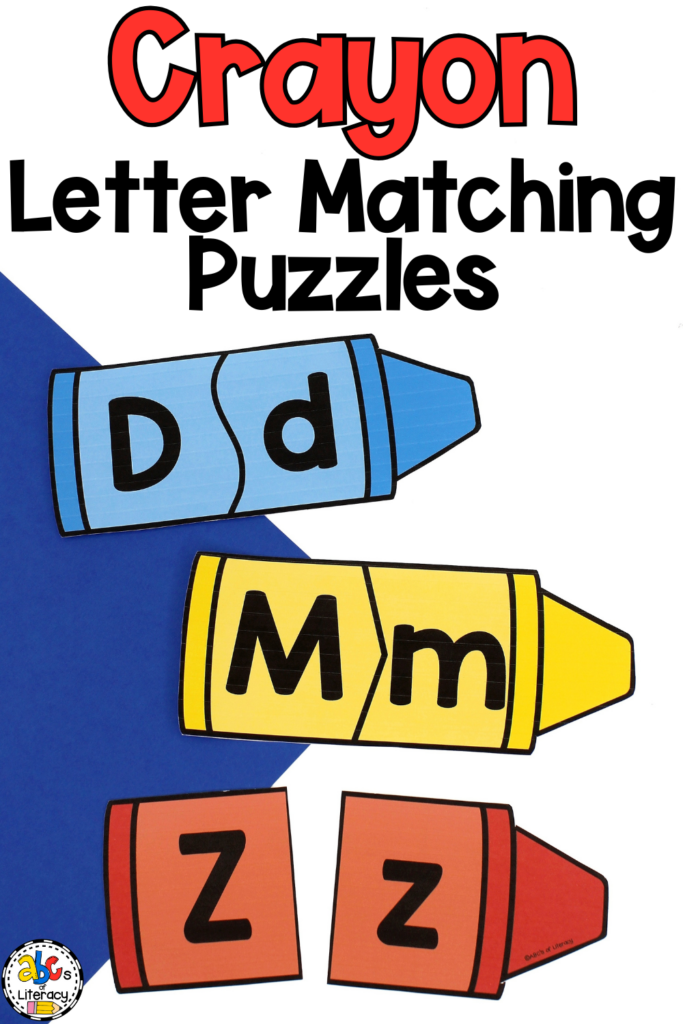
Do you want to save this this resource for later? Pin this on Pinterest and it’ll be here for when you’re ready!
Looking for More Morning Tub Activities?
This activity is just one of the hands-on literacy and math resources included in my Back to School Morning Tubs for Preschool set.
If you love this freebie, be sure to check out the full bundle for even more engaging ideas to kick off your school year with ease.
Grab Your Free Crayon Letter Matching Puzzles:
Ready to try this fun and free alphabet activity in your classroom? Fill out the form here: