
Beginning Sounds Bingo Game
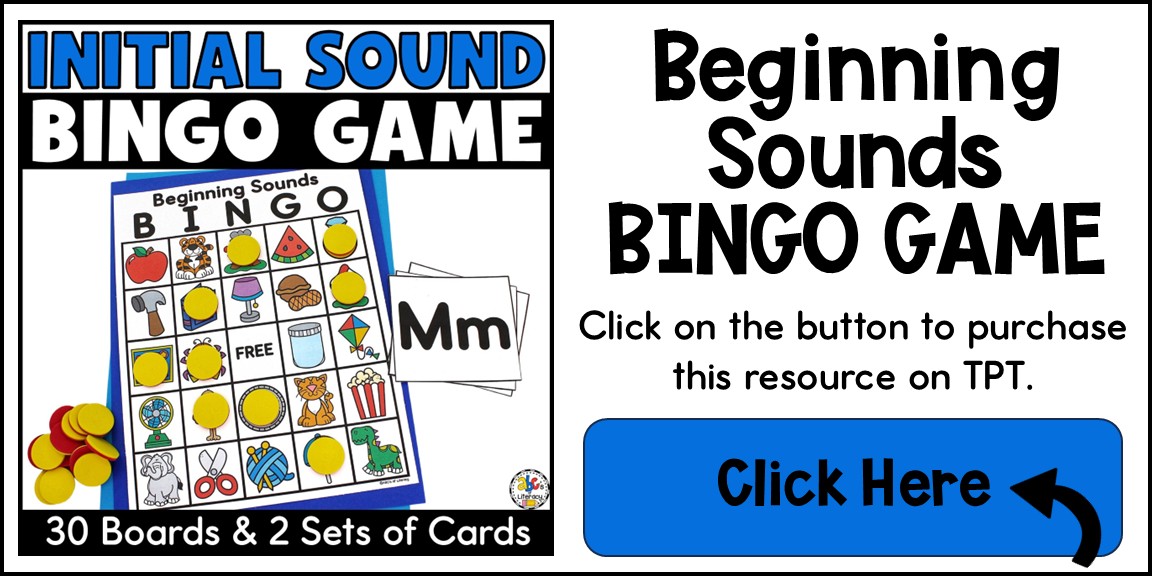
B-I-N-G-O! You are going to win with this educational Beginning Sounds Bingo Game! Reading activities like this one are an engaging and entertaining way for your beginning readers to practice identifying initial sounds.
With 30 unique bingo boards and two sets of calling cards, this resource is ready for your whole class or small groups.
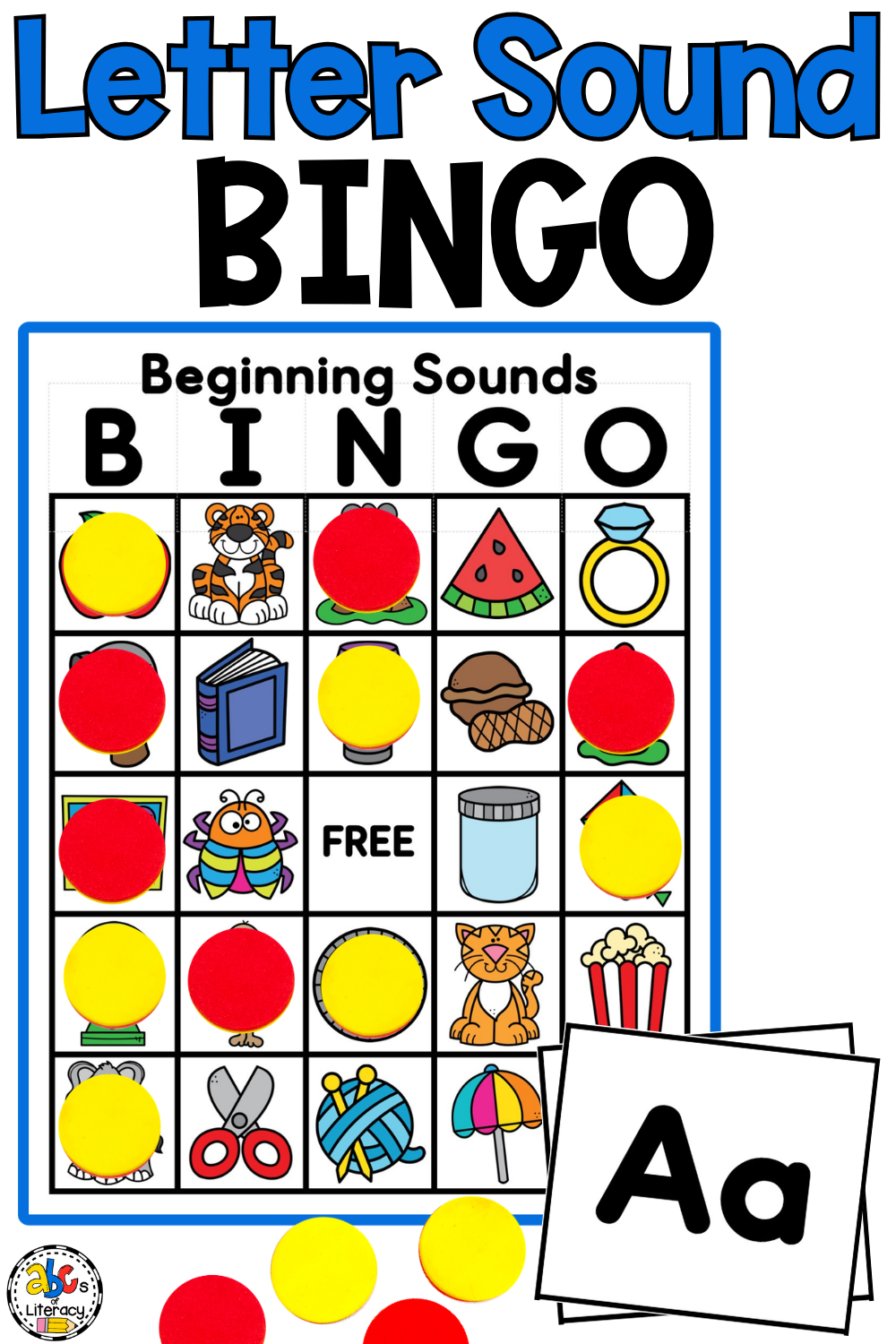
Beginning Sounds Bingo Game:
This fun beginning sounds bingo game does more than fill time — it gives students meaningful, repeated practice with one of the most foundational phonics skills they need to become readers. Here’s what makes this resource work.
Builds Phonemic Awareness Through Play
Before children can decode words, they need to hear and identify the individual sounds that make up spoken language — and the first sound in a word is one of the earliest and most teachable. Every round of this beginning sound bingo game gives students repeated practice isolating initial sounds as they listen to a calling card, search their board, and make the connection between the sound and the picture that starts with it. That process — hear the sound, find the match — is exactly the kind of active, repeated exposure that builds phonemic awareness efficiently.
Two Calling Card Sets = Two Difficulty Levels Built In
This is one of the most useful features of the resource: it includes two complete sets of calling cards rather than one. The letter calling card set shows capital and lowercase letters, so the caller names a letter and students find the picture that begins with that sound. The picture calling card set shows images, so the caller says the sound and students find the picture on their board that starts with that sound.
That built-in flexibility means you can use the same resource at two different points in the year (or with two groups at different skill levels) simply by switching which calling card set you use.
30 Boards — Whole Class, No Repeats
This resource includes 30 unique boards, which means every student in a typical elementary classroom gets a different board. No two students are covering the same pictures in the same order at the same time — which keeps the game genuinely competitive and prevents early finishers from giving away the answers to classmates who are still working.
Thirty boards also make this the ideal substitute teacher activity. Everything is self-contained, rules are simple enough for a new adult to explain in under two minutes, and the whole class can play together without any additional setup.
Fits Multiple Instructional Contexts
This resource is genuinely flexible — teachers across the reviews use it in several different ways:
- Whole-class games — all 30 boards in use at once, perfect for a Friday phonics game or a substitute day
- Literacy centers — set out a handful of boards with a volunteer or older student as caller
- Small group instruction — 3–6 students, easier to observe individual responses and note who’s still guessing
- Intervention and early intervention — the picture-only calling card set works for students who aren’t yet letter-name secure; the structured format makes progress easy to observe
- Partner play — two students take turns being caller and player
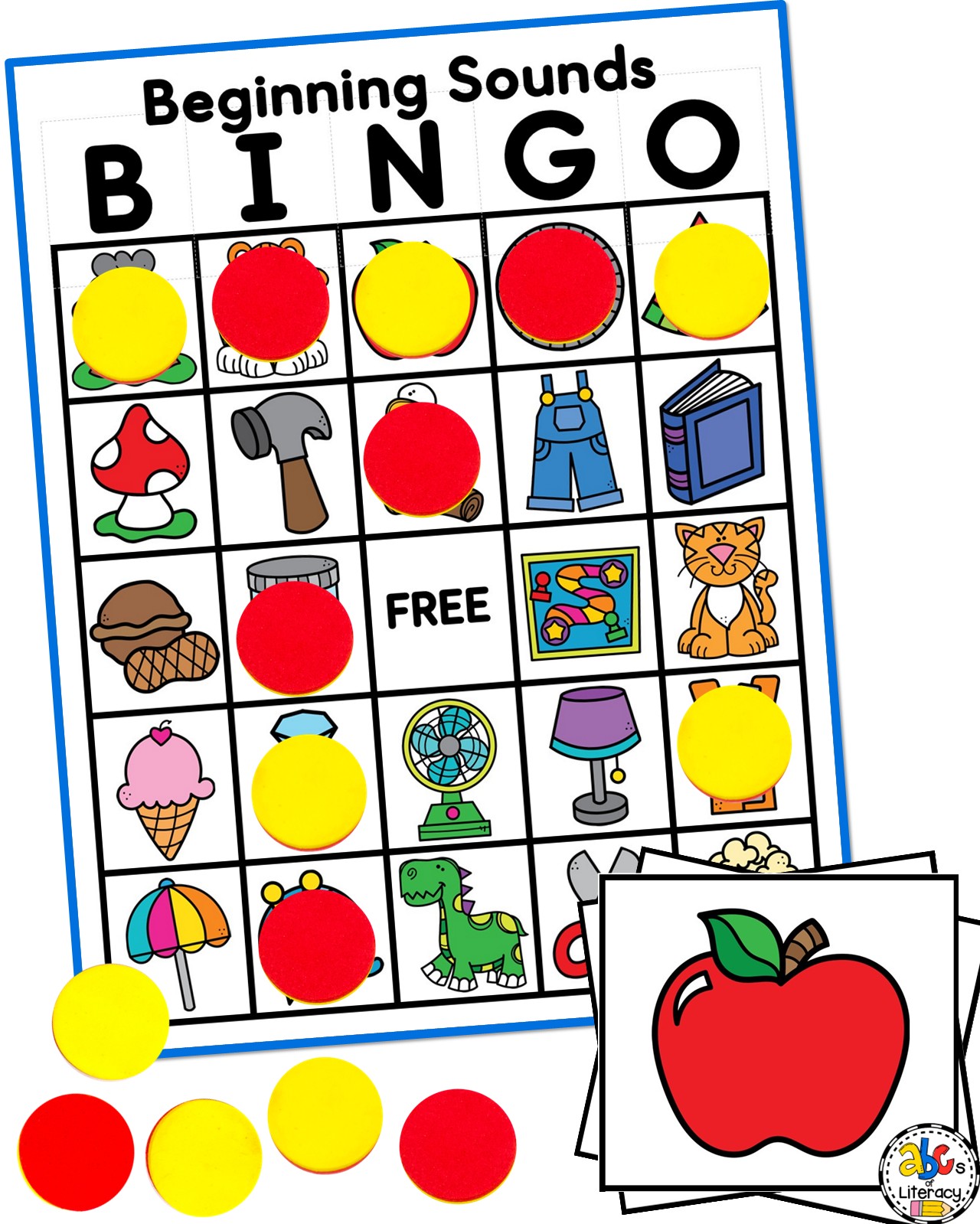
Initial Sounds Bingo Game:
Just like the Bingo game that we all know and love, this version has Bingo boards and calling cards.
Instead of numbers, the Bingo boards have a picture in each box. The first player to get five pictures in a horizontal, diagonal or vertical row gets BINGO!
Why Do Kids Need To Learn Letter Sounds?
Teaching your pre-readers the sounds made by individual letters will help them to decode or sound out words.
This will help your students figure out unknown words as they learn how to read. It will also help your students to make the connection between words in print and spoken words.
Getting Ready to Play:
What’s Included:
This post may contain affiliate links. Please read our disclosure here.
- 30 Beginning Sound Bingo Boards
- 1 Set of Letter Calling Cards (capital and lowercase letters)
- 1 Set of Picture Calling Cards
What Else Is Needed:
- White Card Stock or Copy Paper
- Laminator and Laminating Sheers
- Paper Cutter or Scissors
- Bingo Markers (mini erasers, pom poms, two-color counters, or dry erase markers)
How To Play The Beginning Sounds Bingo Game:
To begin, each player selects a Bingo board. Before the first round, review the pictures on the boards and practice saying the beginning sound for each one.
Next, you or a student caller will draw a calling card.
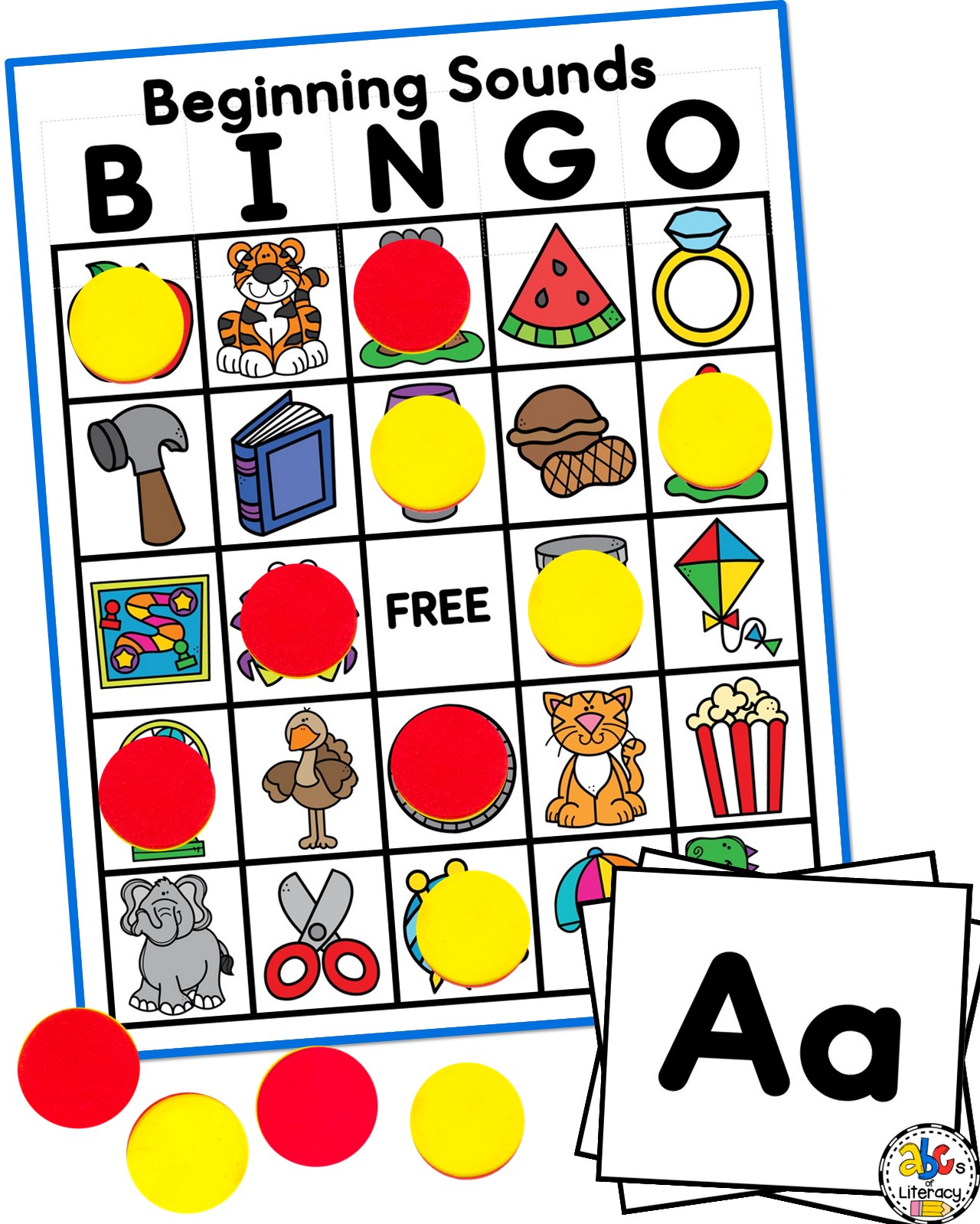
Using the Letter Calling Cards: The caller names the letter on the card. Players find the picture on their board that begins with that letter sound and covers it with a marker.
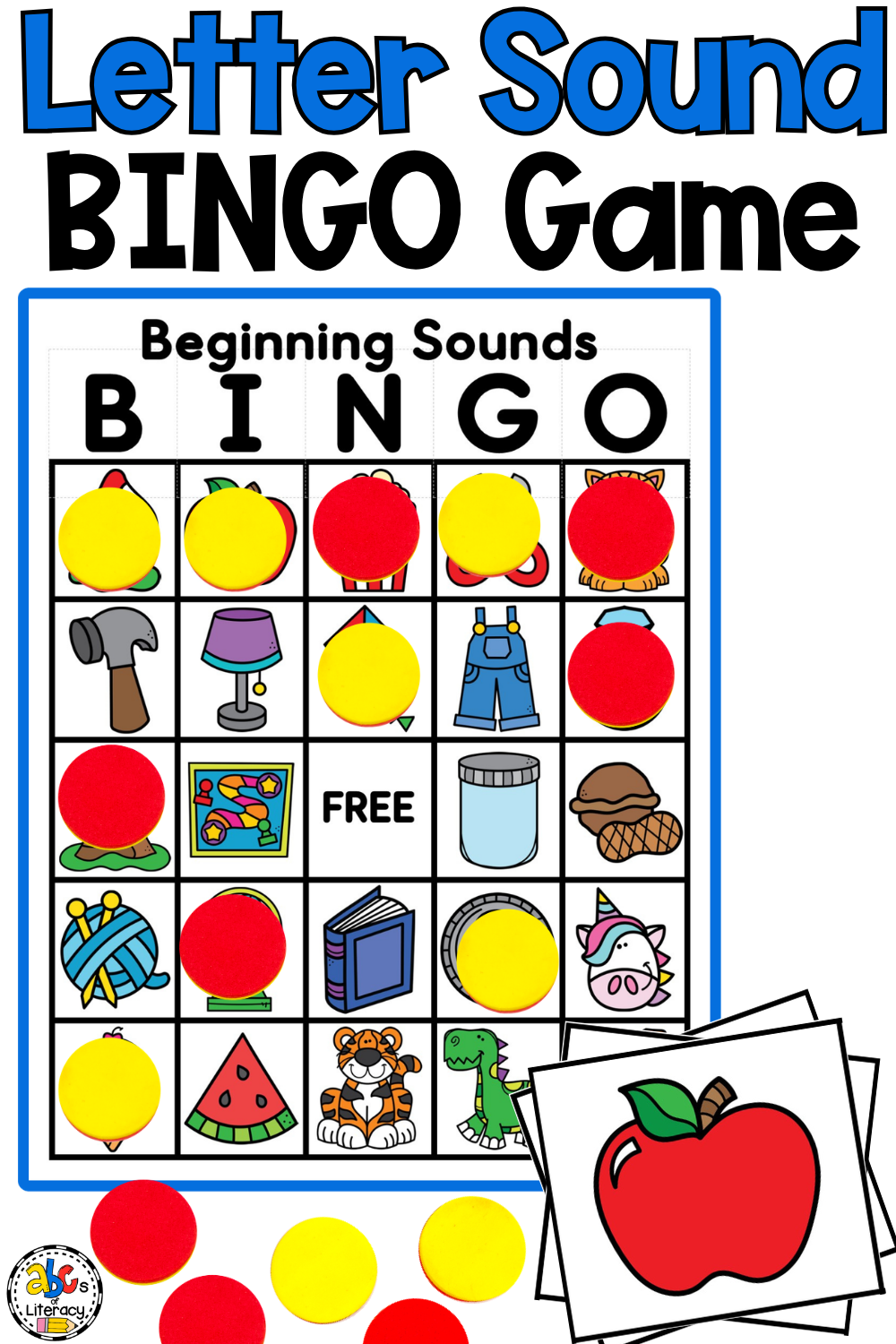
Using the Picture Calling Cards: The caller says the picture’s beginning sound. Players find the picture on their board that begins with that sound and covers it.
For bingo markers, you can use mini erasers, pom poms, two-color counters, or any other small manipulative. If you laminate the boards or put them in dry erase pockets, your kids can mark answers with dry erase markers too.
The first player to get five pictures in a horizontal, diagonal, or vertical row calls BINGO!
Next Steps and Recommendations
Ready to bring this into your classroom? Here’s how to go to game day in a few steps.
1. Get the resource. Click the button below to purchase the Beginning Sounds Bingo Game on Teachers Pay Teachers. You’ll receive a 47-page PDF with 30 bingo boards, a set of letter calling cards, and a set of picture calling cards.
2. Print and prep. Print the bingo boards on white card stock and laminate for durability, or slide them into dry erase pockets. Then, print the two sets of calling cards on card stock, laminate, and cut apart. Store each calling card set in its own small container so you can quickly grab whichever set you need.
3. Preview pictures with students before the first round. Go through the pictures on the boards together and practice saying the beginning sound for each one. This takes a few minutes and dramatically improves the quality of play on the first round.
4. Start with the letter calling cards. For most groups, especially early in the year, the letter-calling version (name a letter, find the picture) is the right starting point. Once students are confident, switch to the picture calling cards for added challenge.
5. Build it into your regular rotation. Don’t use it once and put it away. This game works well as a literacy center activity, a Friday whole-class game, a small group warm-up, or a substitute day staple. The laminated boards and reusable markers mean it’s always ready to go with no additional prep.
6. Pair with other beginning sounds practice. Bingo is a reinforcement activity — it works best alongside other ways of practicing the same skill. Check out these Beginning Sounds Activities.
Frequently Asked Questions
What grades is this game best for? The resource is designed for preschool through first grade, with kindergarten being the most common use. Several teachers in the reviews have also used it successfully with second graders who need extra support with beginning sounds, and with pre-K students once they have some familiarity with the alphabet.
How do I use this with a large class? With 30 unique boards, every student in a class of up to 30 gets a different card. The teacher (or a student caller) draws calling cards one at a time and announces the letter or sound. Students mark their boards independently while you manage the pace. It’s one of the few phonics activities that genuinely scales to a whole-class format without losing instructional value.
Can I use this for intervention or small group instruction? Yes — it’s particularly effective in small groups of 3–6 students, where you can observe individual responses closely and note which students are consistently hesitating or making errors.
What’s the best marker to use? For laminated boards: dry erase markers or any small manipulative (mini erasers, pom poms, two-color counters).
How long does a round take? A typical round with 26 calling cards at a comfortable pace takes 10–15 minutes for young learners. You can shorten a round by playing to four corners or a shorter line pattern, or lengthen it by targeting a full blackout. Most teachers fit 1–2 rounds into a center rotation or closing-circle block.
My students are at very different skill levels. Can the game work for all of them? Yes — the two calling card sets give you two built-in difficulty levels. You can run both sets in different groups simultaneously, or switch the whole class from one set to the other as the year progresses.
Is this good for a substitute teacher? It’s one of the better sub activities for a phonics classroom — low prep, clear rules, self-contained, and the whole class can participate together. The 30 boards mean you don’t need to group students or set up stations; everyone gets a board and the caller runs the game.
Pin It For Later:
Do you want to save this this resource for later? Pin this on Pinterest and it’ll be here for when you’re ready!
More Literacy Resources:
If you are looking for more literacy resources, check these out:
- 5 Pre-Reading Skills Kids Need To Be Successful Readers
- Ways to Improve Handwriting Skills
- What Are Sight Words?
You May Also Like:
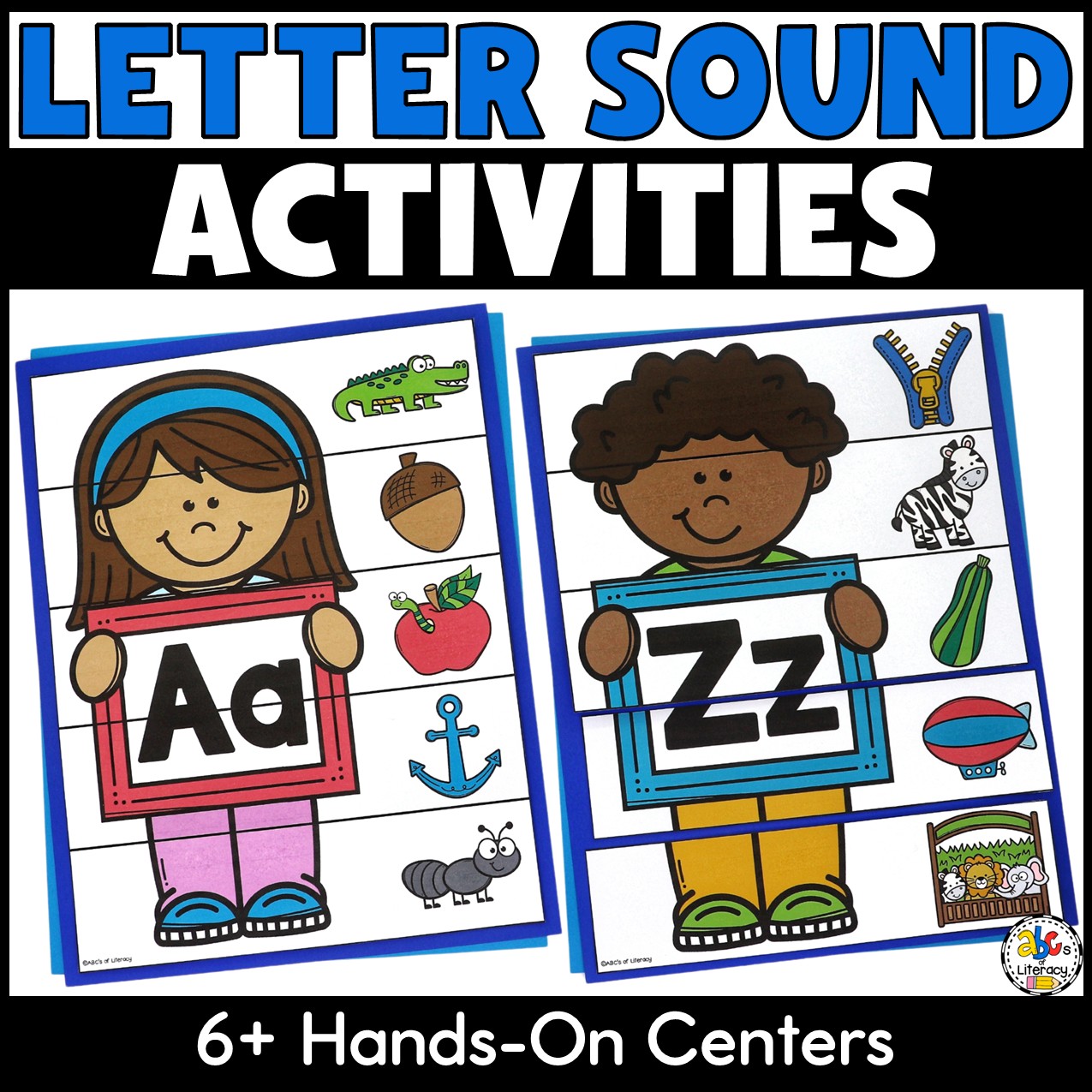
Make learning letters and sounds fun with this bundle of hands-on Beginning Sound Activities!
From puzzles to linking activities, your students will work on identifying, sorting, and matching letters and pictures that go together.
These low-prep initial sound resources can be used for literacy centers, morning tubs, small groups, intervention, or as enrichment activities for early finishers.
Get the Beginning Sounds Bingo Game:
Ready to bring this phonics game into your classroom? Click below to purchase on Teachers Pay Teachers.
Thank you! This game looks amazing!
You’re welcome! Thank you for your comment. Hope your kids enjoy it!
So excited to use this with my first graders!
I know my kiddos will love this!
Great engaging way to practice letter sounds.
Thank you!
So excited to use the resource with my kiddos!
Thank you! Can’t wait to use this!
Can’t wait to use this with my students!
Love this activity for my students.
My students will love this!
My students will love it
Great idea for nursery pupils!