
Winter Mystery Picture Puzzle
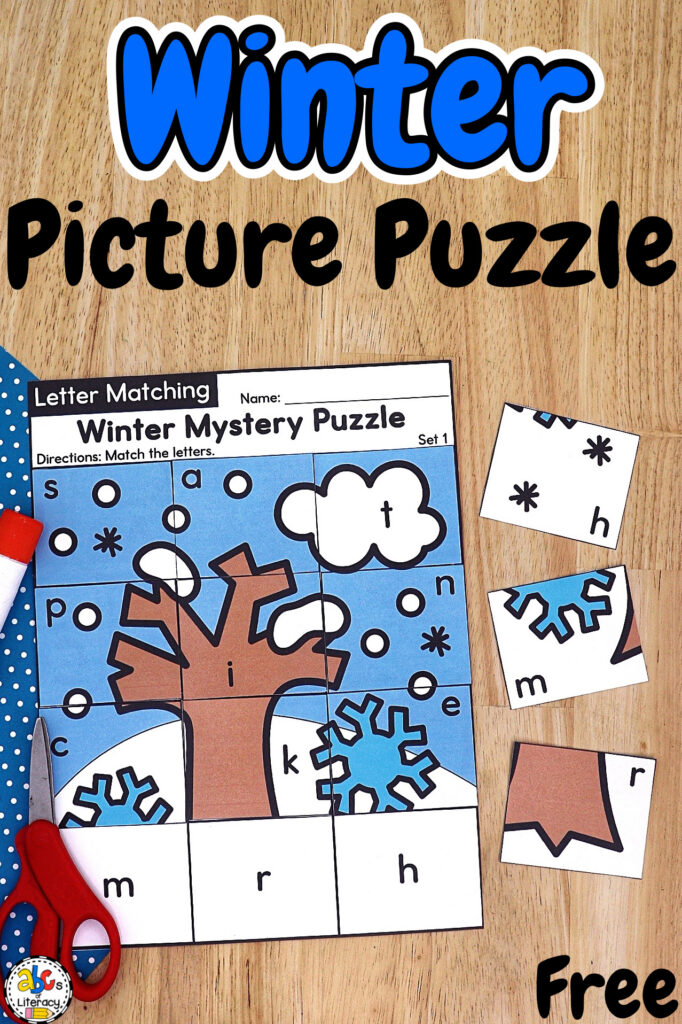
Are you looking for a fun and engaging way for your kids to practice letter recognition this winter? Grab this free printable Winter Mystery Picture Puzzle!
Your preschoolers and kindergartners will have fun discovering a hidden winter picture as they identify and match lowercase letters.
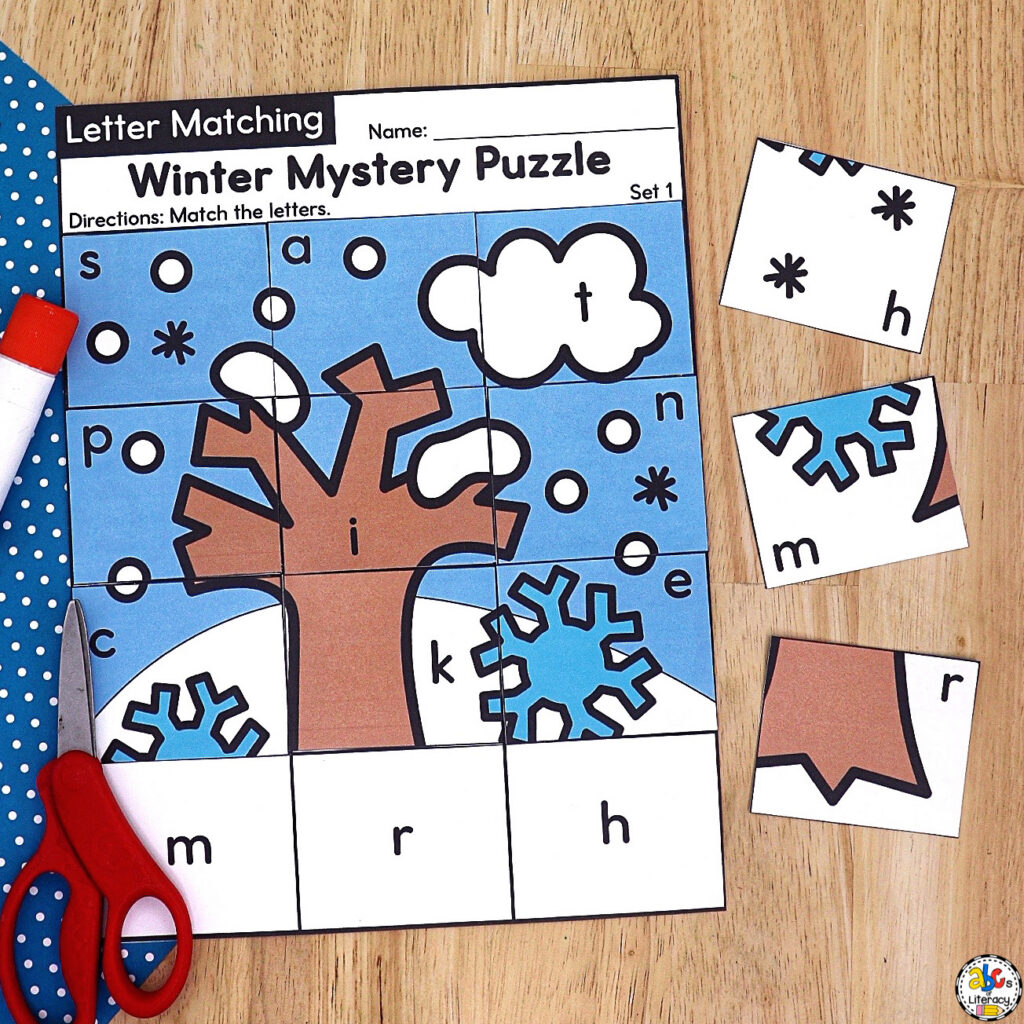
With this hands-on alphabet activity, your young learners will cut out the puzzle pieces, match the lowercase letters, and glue the pieces onto the worksheet to reveal a snowy winter scene.
It’s a fun way for your kids to work on letter recognition, visual discrimination, and fine motor skills all in one activity!
Available in both color and black and white, this low-prep winter literacy activity is perfect for literacy centers, morning work, and small group instruction.
Learning Benefits of the Winter Mystery Picture Puzzle:
Providing children with engaging, hands-on opportunities to practice letter recognition can help them develop important pre-reading skills.
Unlike traditional letter matching worksheets, mystery picture puzzles give children the added excitement of discovering a hidden picture as they complete the activity.
As your young learners cut, match, glue, and color their winter mystery picture puzzles, they’ll practice several important early learning skills.
Lowercase Letter Recognition
Learning to recognize lowercase letters is an important part of developing alphabet knowledge.
Since lowercase letters make up most of the letters children encounter in books and other printed materials, providing opportunities to identify and recognize them helps prepare children for reading and writing.
With this winter mystery picture puzzle, children will practice identifying 12 lowercase letters as they match the letters on the puzzle pieces to the letters on the worksheet.
Encourage children to say the name of each letter aloud as they work through the puzzle.
Letter Matching
Matching identical letters is a great way to help children become familiar with the shapes and features of the letters of the alphabet.
As children select a puzzle piece, they’ll look at the lowercase letter and find the matching letter on the worksheet.
These repeated opportunities to compare and match letters help reinforce their developing alphabet knowledge.
Visual Discrimination Skills
Visual discrimination is the ability to recognize similarities and differences in what we see.
When children are first learning the alphabet, they may have difficulty distinguishing between letters that have similar shapes.
As children compare the lowercase letters on the puzzle pieces to the letters on the worksheet, they’ll practice noticing the lines, curves, and other features that make each letter unique.
Developing visual discrimination skills can help children become more confident in recognizing and differentiating between letters.
Visual Scanning Skills
To find the matching lowercase letter, children must look across the rows and columns of the worksheet.
This gives them opportunities to practice visual scanning as they search for the letter that matches the one on their puzzle piece.
Visual scanning is a useful skill for completing puzzles, locating information on a page, and participating in other early literacy activities.
Fine Motor Skills
As children cut out the puzzle pieces, apply glue, and color their completed mystery pictures, they’ll work on developing their fine motor skills.
Using scissors, glue sticks, and crayons gives children opportunities to strengthen the small muscles in their hands and fingers.
These muscles are important for everyday activities such as writing, drawing, cutting, and fastening clothing.
Problem-Solving Skills
Mystery picture puzzles encourage children to use their problem-solving skills as they determine where each puzzle piece belongs.
As the winter picture begins to appear, children can look at the illustrations and notice whether the lines and shapes on neighboring puzzle pieces fit together.
If a piece appears to be in the wrong place, encourage children to compare the letters again and check their work.
Discovering the hidden picture gives children a fun and meaningful reason to complete the letter matching activity.
Following Directions and Completing Tasks
Completing the winter mystery picture puzzle requires children to follow several steps in order.
They’ll cut out the puzzle pieces, identify and match the lowercase letters, glue the pieces onto the worksheet, and color the completed picture if they’re using the black-and-white version.
Following these steps gives children opportunities to practice listening, organization, persistence, and completing a task from beginning to end.
Getting Ready to Use the Winter Mystery Picture Puzzle
This post may contain affiliate links. Please read our disclosure here.
What’s Included:
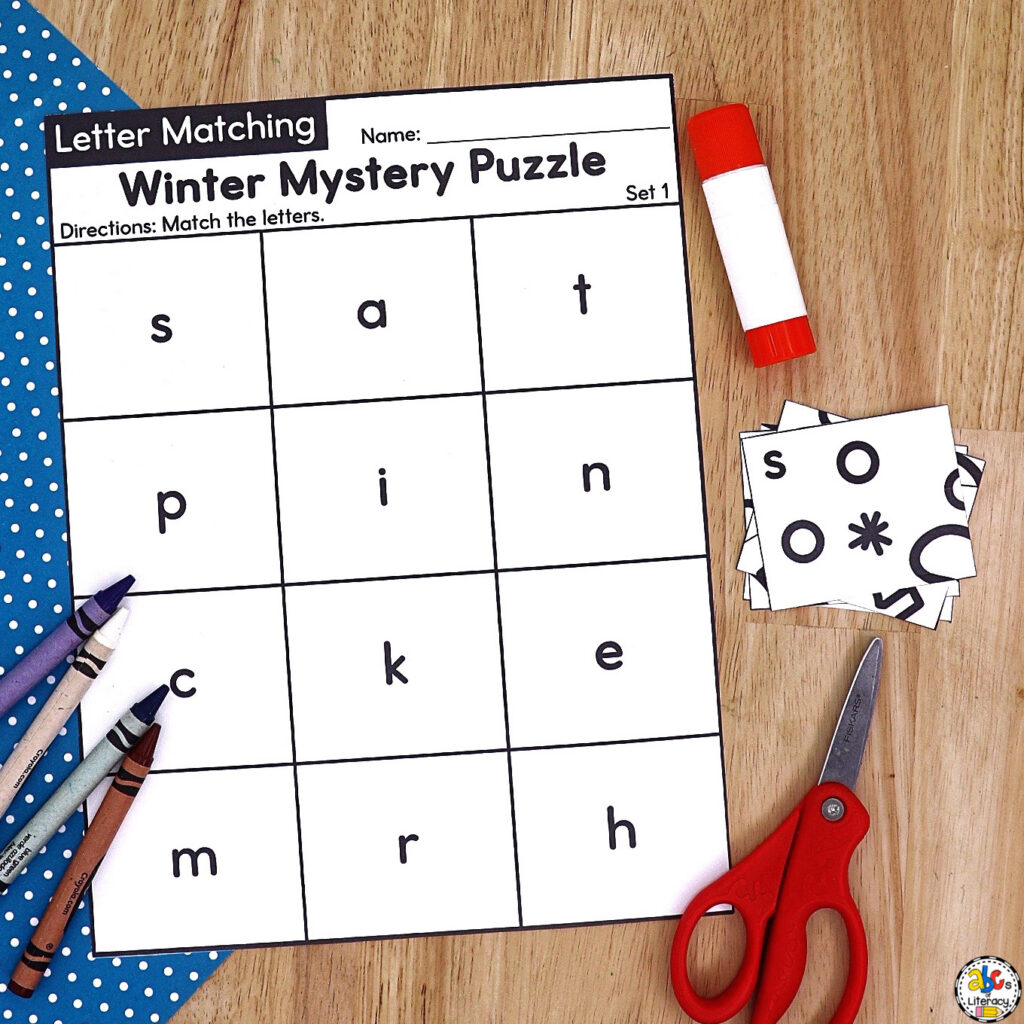
- 1 Winter Mystery Puzzle Letter Matching Worksheet
- 1 Winter Mystery Picture Puzzle (in color and black and white)
The free printable includes one mystery picture puzzle with 12 pieces and two printing options.
What Else Is Needed:
- White copy paper
- Scissors
- Glue sticks
- Crayons, colored pencils, or markers
- Alphabet chart (optional)
To get this winter alphabet activity ready for your young learners to use, fill out the form at the bottom of this page.
After receiving the email with the printables, download the resource and print the letter matching worksheet and your preferred version of the mystery picture puzzle.
If you want your children to get additional fine motor practice and personalize their completed pictures, print the black and white version.
If you’re looking for a quicker activity or want to provide additional visual clues for children as they assemble the puzzle, print the color version.
You can then make as many copies as you need for your students and gather the rest of the supplies.
For younger children who are still developing their scissor skills, you can cut out some or all of the puzzle pieces ahead of time.
How to Use the Winter Mystery Picture Puzzle
This winter letter matching activity is simple to use and gives children an exciting way to practice lowercase letter recognition while discovering a hidden picture.
Step 1: Introduce the Mystery Picture Puzzle
Before introducing the activity, explain to your children that there is a hidden winter picture waiting to be discovered.
Tell them that they’ll need to identify and match the lowercase letters to figure out where each puzzle piece belongs.
You can review the letters on the worksheet together before children begin cutting out the puzzle pieces.
Encourage children to make predictions about what the mystery picture might be, but don’t reveal the answer just yet!
Step 2: Cut Out the Puzzle Pieces
First, your preschoolers and kindergartners will use scissors to cut out the 12 puzzle pieces.
Encourage them to take their time and follow the straight lines as they cut.
Cutting out the puzzle pieces gives children opportunities to practice scissor skills, fine motor control, and hand-eye coordination.
Have children place their puzzle pieces in a small tray or container to keep them organized while they work.
Step 3: Identify the Lowercase Letter
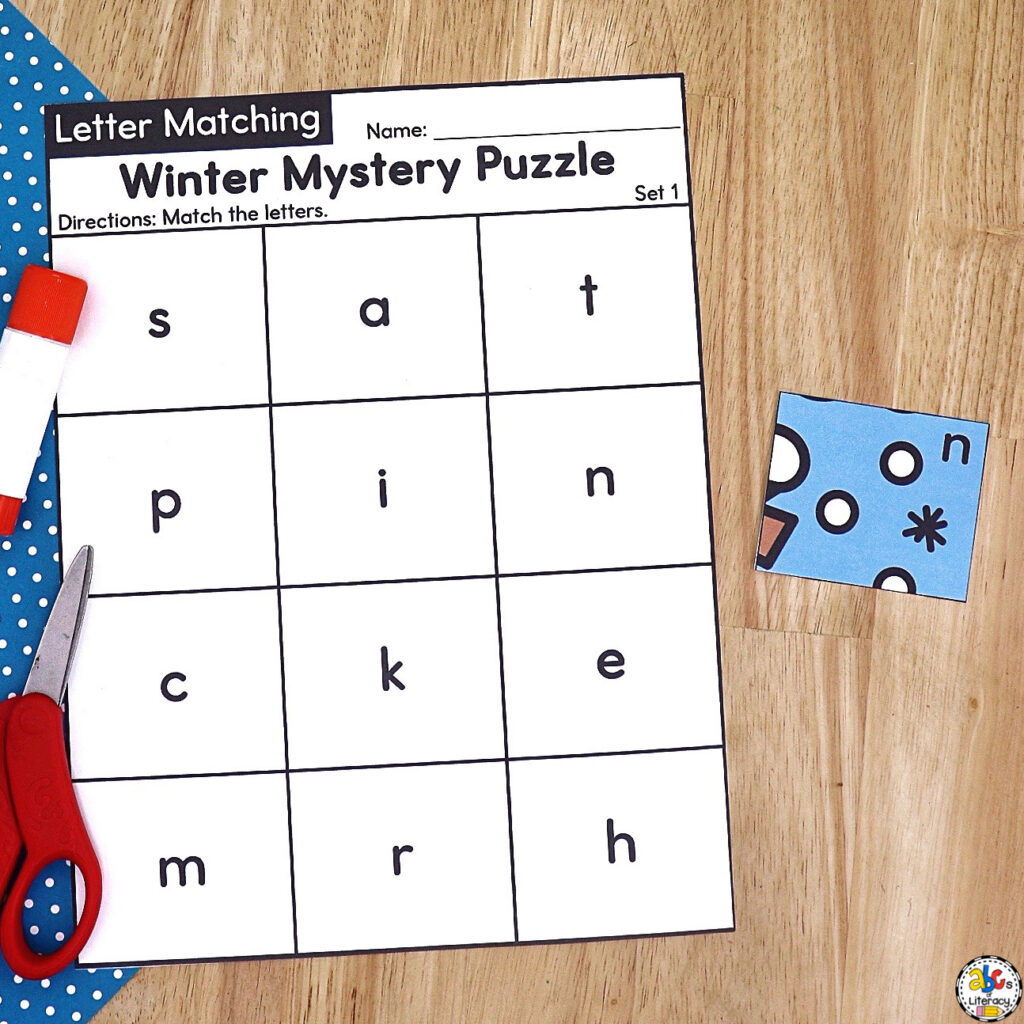
Next, your young learners will select one of the puzzle pieces and identify the lowercase letter printed on it.
Encourage them to say the name of the letter aloud.
If your children are still developing their letter recognition skills, you can provide an alphabet chart or help them identify the letter.
Step 4: Find the Matching Lowercase Letter
Children will then look at the letter matching worksheet and find the lowercase letter that matches the one on their puzzle piece.
For example, if they select a puzzle piece with the lowercase letter s, they’ll look at the worksheet and find the lowercase s.
Encourage children to look carefully at the letters and compare their shapes before deciding where the puzzle piece belongs.
Step 5: Place and Glue the Puzzle Pieces
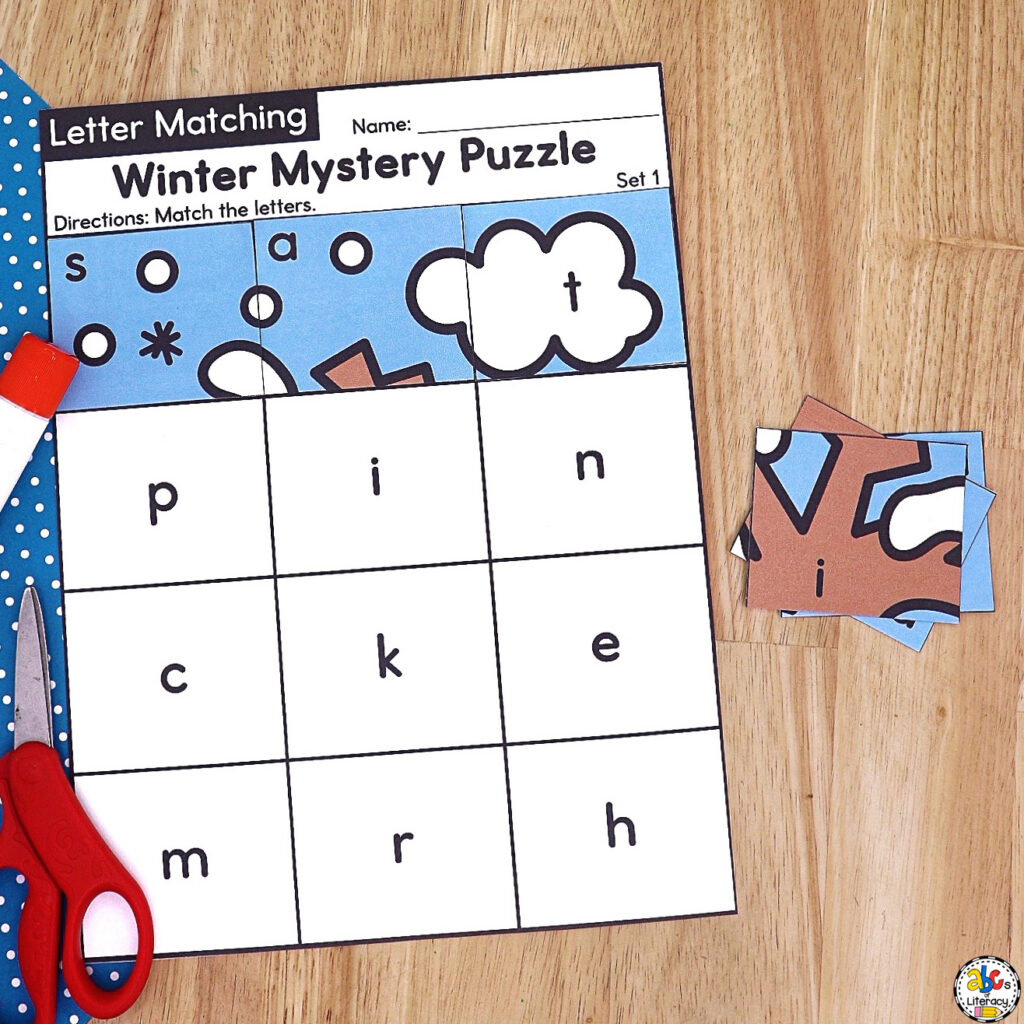
Once children find the matching letter, they’ll place the puzzle piece over the corresponding letter on the worksheet.
Have children continue matching and arranging the puzzle pieces until the winter picture begins to appear.
I recommend having children arrange all the puzzle pieces before gluing them down. This gives them opportunities to check their work and make changes if needed.
Once they’re happy with their completed puzzle, they can glue each piece into the correct space.
Step 6: Reveal the Winter Mystery Picture
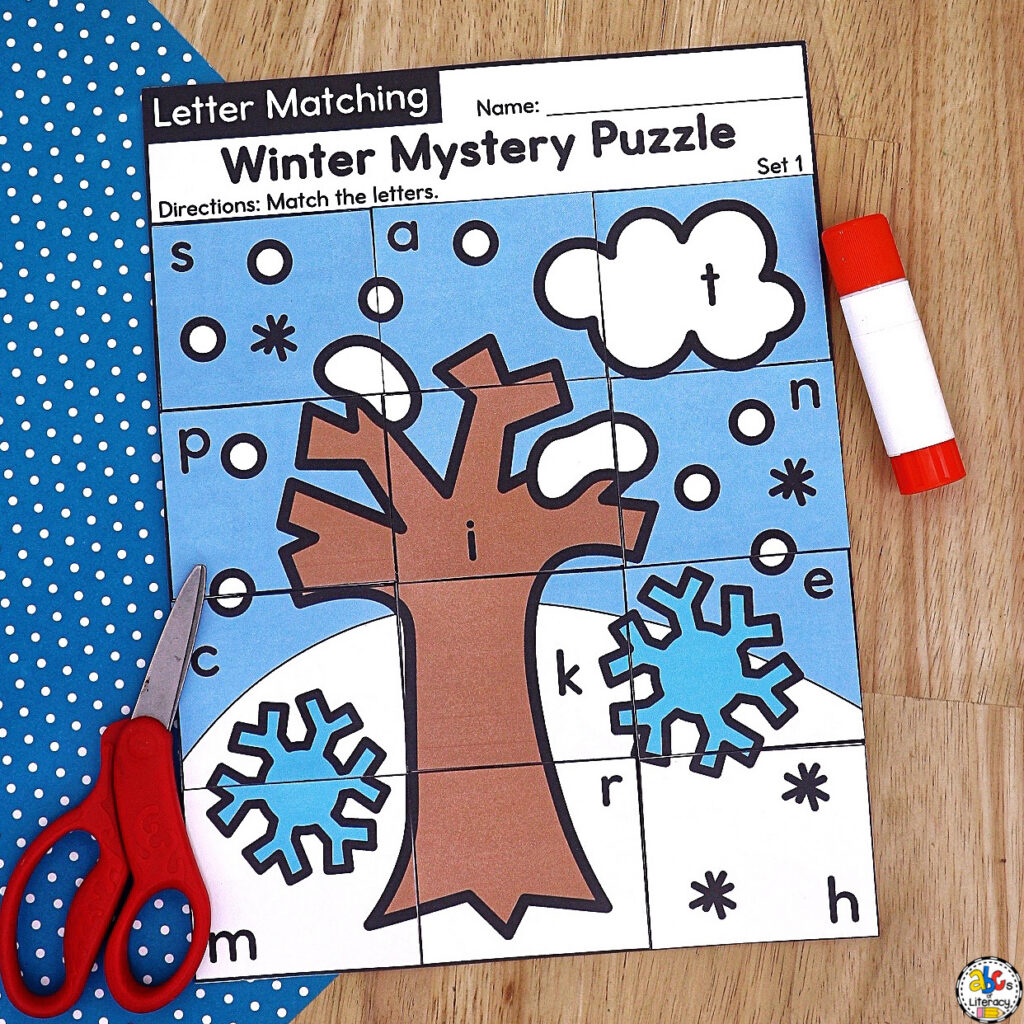
As children complete the letter matching activity, they’ll discover a fun winter scene!
Encourage your young learners to look closely at their completed pictures and describe what they see.
You can ask questions such as:
- What do you see in your mystery picture?
- What season does the picture show?
- How can you tell that it’s winter?
- What was your favorite part of completing the puzzle?
These questions give children opportunities to develop their oral language skills and practice using winter-themed vocabulary.
Step 7: Color the Mystery Picture
If your children are using the black and white version of the puzzle, they can use crayons, colored pencils, or markers to color their completed winter pictures.
Encourage them to choose their own colors and personalize their artwork.
If they’re using the color version, their mystery pictures will be ready to display as soon as they finish assembling them.
This Winter Mystery Picture Puzzle is a fun way for your students to practice lowercase letter recognition, fine motor skills, and problem-solving skills this winter!
Ways to Differentiate the Winter Mystery Picture Puzzle:
Every child develops alphabet knowledge and fine motor skills at a different pace. One of the benefits of this winter letter matching activity is that you can easily adapt it to meet the needs of different learners.
For Beginning Learners
Before introducing the puzzle, review the lowercase letters on the worksheet with your children.
Model how to select a puzzle piece, identify the letter, and find the matching letter on the worksheet.
Provide an alphabet chart or work alongside children as they complete the first few matches.
You can also give children a few puzzle pieces at a time instead of having them work with all 12 pieces at once.
For Children Who Need Extra Support
Use the color version of the mystery picture puzzle to provide additional visual clues.
As children match the letters, they can also look at the colors, lines, and shapes on the puzzle pieces to help them determine whether the pieces are in the correct locations.
Encourage children to check the letters first and then use the picture to check their work.
You can also temporarily cover part of the worksheet to reduce the number of letters children need to scan.
For Children Who Are Developing Scissor Skills
The straight lines on the puzzle pieces provide opportunities for children to practice using scissors.
If cutting out all 12 puzzle pieces is too challenging, cut the puzzle into strips ahead of time and have children cut the strips into individual pieces.
You can also provide some or all of the pieces already cut out.
This allows children to focus on lowercase letter recognition and matching without the additional challenge of cutting out the entire puzzle.
For Fine Motor Practice
Use the black and white version of the mystery picture puzzle to give children additional opportunities to practice their fine motor skills.
Have children cut out the puzzle pieces, apply glue, position the pieces on the worksheet, and color their completed pictures.
Each step gives children opportunities to develop hand strength, finger control, and hand-eye coordination.
For Letter Sound Practice
Once children can identify the lowercase letters, encourage them to say a sound associated with each letter before matching the puzzle piece to the worksheet.
For example, if a child selects a puzzle piece with the lowercase letter m, they can say the /m/ sound before finding the matching letter.
You can also encourage children to think of words that begin with the letters on the puzzle pieces.
Some winter-themed examples include:
- s – snow
- i – ice
- c – cold
- m – mitten
- h – hat
This simple extension gives children opportunities to practice letter-sound correspondence while developing their winter vocabulary.
For an Extra Challenge
Have children complete the black and white mystery picture puzzle independently without using an alphabet chart.
Encourage them to identify each letter and say a corresponding letter sound before placing the puzzle piece on the worksheet.
For additional handwriting practice, have children write the lowercase letters on a separate sheet of paper or dry-erase board as they complete the puzzle.
You can also invite children to write or dictate a sentence describing their completed winter pictures.
For a Reusable Alphabet Activity
If you’d like to use the mystery picture puzzle repeatedly, print the worksheet and puzzle pieces on white cardstock.
Laminate the pages and cut out the individual puzzle pieces.
Instead of gluing the pieces onto the worksheet, children can arrange them in the correct spaces to reveal the mystery picture.
Store the worksheet and puzzle pieces together in a resealable bag or storage pouch.
This variation is especially useful for literacy centers, morning tubs, and small group instruction.
Frequently Asked Questions:
What age is the Winter Mystery Picture Puzzle for?
This winter alphabet activity is designed for preschoolers and kindergartners who are learning to recognize and match lowercase letters.
It can also be used with older children who need additional practice with letter recognition, visual discrimination, or fine motor skills.
Which letters are included in the mystery picture puzzle?
The free sample puzzle includes the following 12 lowercase letters:
s, a, t, p, i, n, c, k, e, m, r, and h.
Children will identify and match these letters as they assemble their mystery pictures.
Do I need to print the mystery picture puzzle in color?
No. The free printable includes both color and black-and-white versions of the same puzzle.
The black-and-white version is a great option if you want to save colored printer ink or provide additional fine motor practice through coloring.
Is the mystery picture puzzle self-checking?
The completed picture provides a visual way for children to check their work.
If a puzzle piece doesn’t appear to fit with the surrounding illustrations, encourage children to compare the letters again and check its placement.
Having children arrange all the puzzle pieces before gluing them down makes it easier for them to correct mistakes.
Pin It for Later:
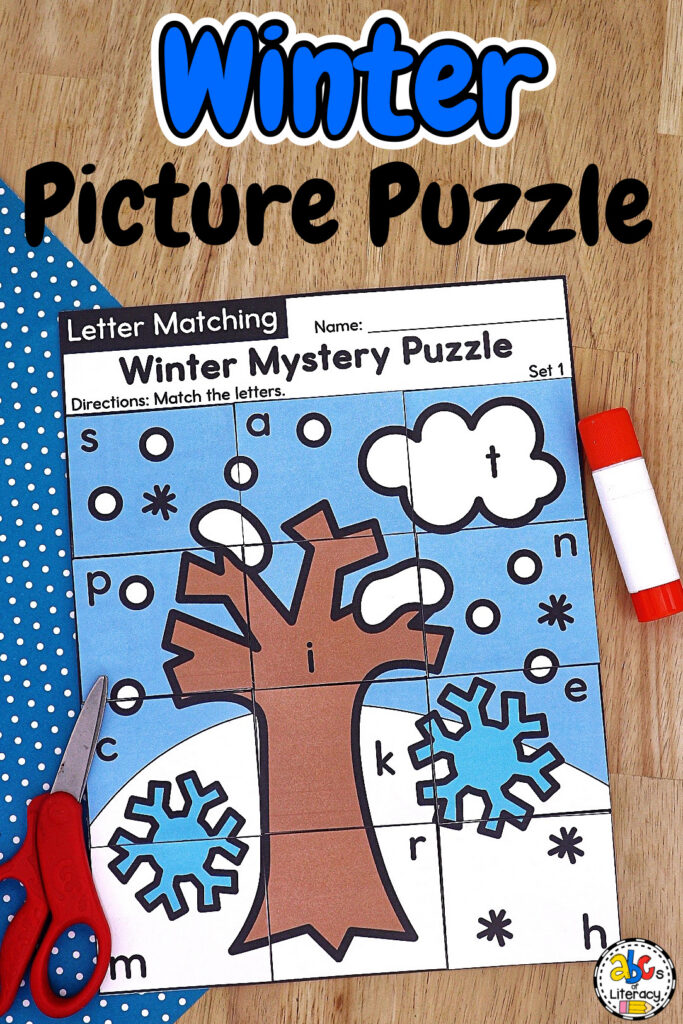
Do you want to save this resource for later?Pin this Winter Mystery Picture Puzzle to your winter literacy, alphabet activities, or preschool activities board on Pinterest so you’ll have it ready when you’re planning your next lesson!
More Winter Literacy Activities for Preschoolers
Are you looking for more ways to incorporate winter-themed learning into your literacy lessons?
Pair this winter mystery picture puzzle with children’s literature and hands-on activities to help your preschoolers and kindergartners develop alphabet knowledge, vocabulary, comprehension, and other important early literacy skills.
Winter Picture Books for Kids
Before or after completing the mystery picture puzzle, share some of these winter-themed picture books with your children.
- The Snowy Day by Ezra Jack Keats: Follow Peter as he explores his neighborhood after a snowfall. This classic picture book provides opportunities to discuss winter weather, snowy day adventures, and seasonal vocabulary.
- No Two Alike by Keith Baker: Follow two little birds as they explore a snowy landscape and discover similarities and differences in the world around them. This picture book pairs especially well with matching and visual discrimination activities.
- Snowflake Bentley by Jacqueline Briggs Martin: Learn about Wilson Bentley and his fascination with snowflakes. This picture book encourages children to look closely at the details and patterns they see in nature.
- Winter Dance by Marion Dane Bauer: Follow a fox as he discovers how different animals prepare for winter. This story provides opportunities to discuss seasonal changes and develop winter vocabulary.
- The Mitten by Jan Brett: Discover what happens when a group of woodland animals squeezes into a lost mitten. This winter favorite is perfect for practicing sequencing, retelling, and making predictions.
After reading these winter picture books, encourage children to describe the illustrations, identify familiar letters in the book titles, or share their own experiences with winter weather.
Winter Literacy Activities for Kids:
Continue the winter-themed learning with these additional hands-on literacy activities.
- Snowy Day Letter Clip Cards: Pair The Snowy Day with a hands-on capital letter matching activity that reinforces letter recognition, visual discrimination, and fine motor skills.
- Snowflake Bentley Alphabet Cards: Practice identifying capital letters and determining whether the letters on the snowflakes are the same or different.
- Earmuff Letter Matching Puzzles: Help children connect uppercase and lowercase letters with 26 winter-themed alphabet puzzles.
- Hibernating Bats Letter Order Activity: Practice alphabetical order by identifying and writing the missing capital letters in alphabet sequences.
- Hot Chocolate Letter Recognition Activity: Children identify letters and letter sounds as they add printable marshmallows to a pretend hot chocolate mug.
You May Also Like These Winter Morning Tubs for Preschool:
Are you looking for more hands-on activities to keep your preschoolers engaged and learning throughout the winter months?
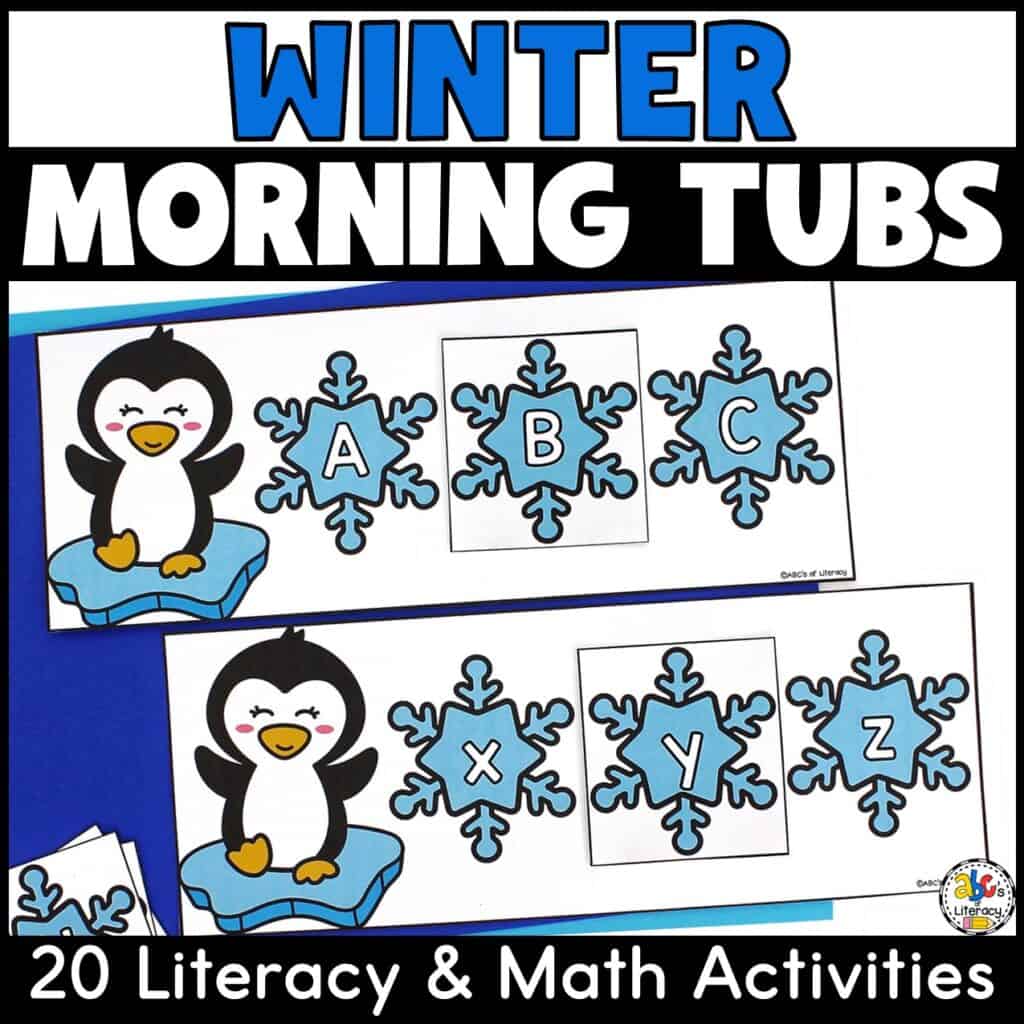
Your preschoolers will have “snow” much fun learning with these themed Winter Morning Tubs for Preschool!
With 20 winter-themed literacy and math activities, plus two bonus math activities, your preschoolers can practice and review a variety of important early learning skills.
From uppercase and lowercase letter matching to beginning sounds, letter formation, number recognition, counting, and patterns, these hands-on resources make learning fun!
Use these winter morning tubs to engage your students in meaningful learning as they enter your classroom. While they’re working, you can greet students, take attendance, answer questions, and prepare for the day.
These low-prep activities are also great for literacy centers, math centers, small group instruction, and early finisher activities.
Click on the picture to learn more about all the activities included in the Winter Morning Tubs for Preschool!
Download the Free Winter Mystery Picture Puzzle
Ready to add some mystery and excitement to your winter alphabet activities? To get the free Winter Mystery Picture Puzzle emailed to you, fill out the form below.
Tip: Please sign up with your personal email address (like Gmail or Yahoo) instead of a school email. Many schools block emails from outside senders, so the download link may never arrive.
If you don’t see the email, check your spam or promotions folder. If you do not see the form, check the settings on your computer, clear your cache, and try using a different browser.