Teaching Letter Recognition
Letter recognition is one of the most important early literacy skills that preschoolers and kindergartners develop before learning to read.
When your students can quickly identify both uppercase and lowercase letters, they are better prepared for learning letter sounds, decoding words, and other reading skills.
If you’re teaching letter recognition to your preschoolers or kindergartners, here are some simple strategies that can help your students.
What is Letter Recognition?
Letter recognition is one of the five pre-reading skills that your preschoolers and kindergartners need to know before they can learn how to read.
It is the ability to identify and name both uppercase and lowercase letters of the alphabet.
Students with strong letter recognition skills can quickly recognize letters in books, on classroom displays, and during literacy activities.
Developing this skill helps children connect letters to their sounds and builds a strong foundation for future reading and writing success.
Why Teach Letter Recognition?
Learning all about letters and having opportunities to use them in different contexts will help your students develop the skills they’ll need for reading success throughout their life.
Through hands-on letter recognition activities, your students will develop the foundational skills needed for future reading and writing success, including:
- Understanding that each letter has its own unique shape
- Naming the letters of the alphabet
- Recognizing uppercase and lowercase letters
- Distinguishing between similar-looking letters
- Building confidence for future phonics instruction
How To Teach Kids Letter Recognition?
Young children learn best by doing. Instead of asking students to memorize letters, provide opportunities for them to manipulate, build, sort, and match letters through play.
When learning feels like play, children are more engaged and retain information better.
It’s important to remember that young learners rarely learn a letter after seeing it once. They need repeated exposure in different contexts.
These activities keep students actively engaged while reinforcing letter identification in a developmentally appropriate way.
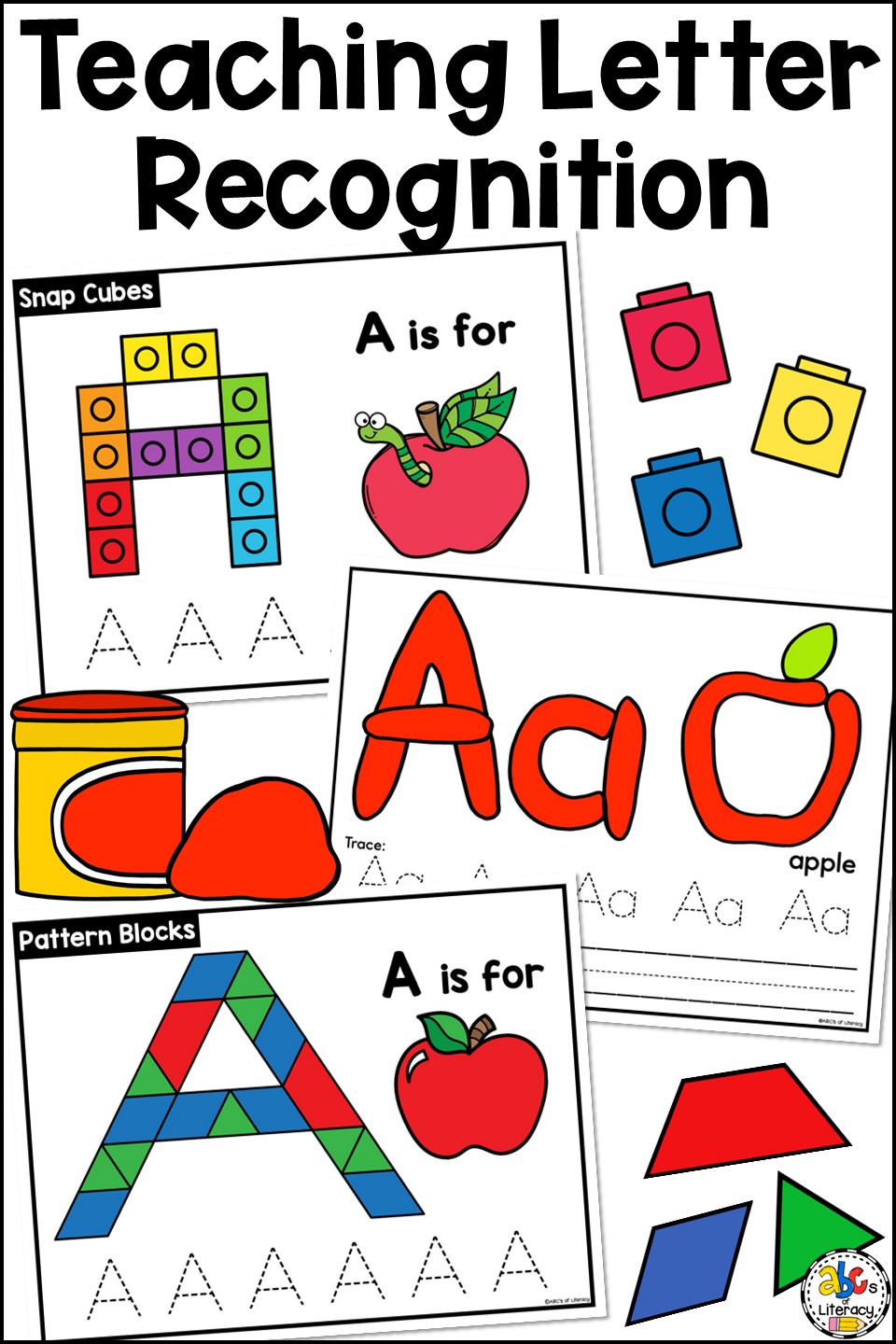
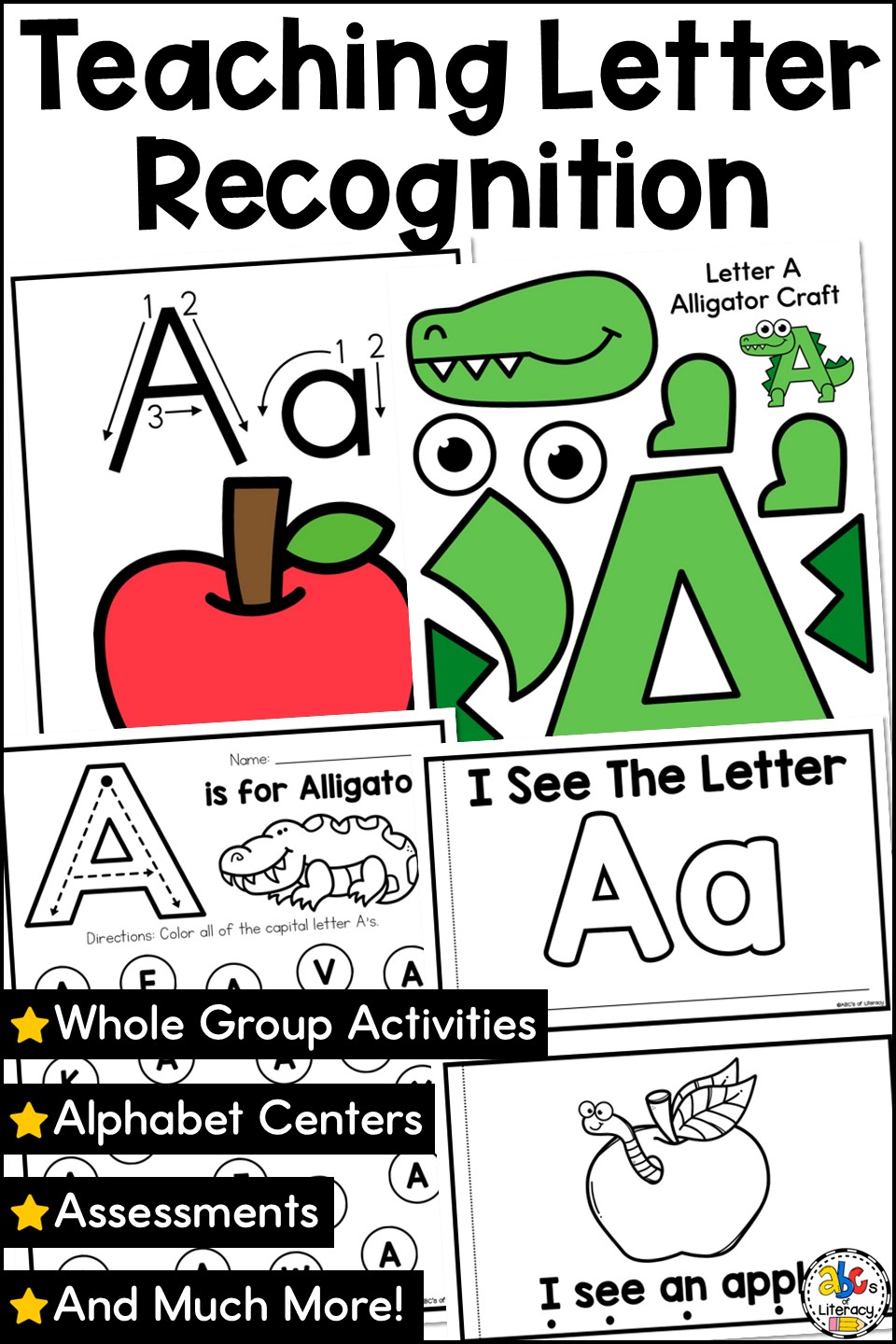
Try incorporating activities like letter recognition games, alphabet crafts, hands-on letter mats, and fine motor journals.
Giving students multiple opportunities to interact with letters in different ways helps strengthen their recognition skills over time.
When do kids Learn Letter Recognition?
Every classroom includes students with varying levels of alphabet knowledge.
Many children begin recognizing some letters between the ages of three and four, often starting with the letters in their own names. However, every child develops at their own pace.
They will usually recognize the letters in their names first.
Some children enter preschool recognizing only a few letters, while others already know most of the alphabet.
In kindergarten, kids will begin to make the connection between letters and sounds.
Providing activities with different levels of difficulty allows every child to experience success.
How To Introduce Letter Recognition?
When teaching letter recognition to your kids, you don’t have to introduce them in alphabetical order.
Children have usually seen the letters and heard the sounds in their names, so it is usually easier for them to identify those letters.
The letters in their names will have more meaning and allow them to practice recognizing those letters in different ways too.
Once students can identify the letters in their names, gradually introduce additional letters through books, games, and hands-on literacy centers.
Revisiting previously taught letters throughout the year helps build automatic letter recognition.
Letter Learning Activities:
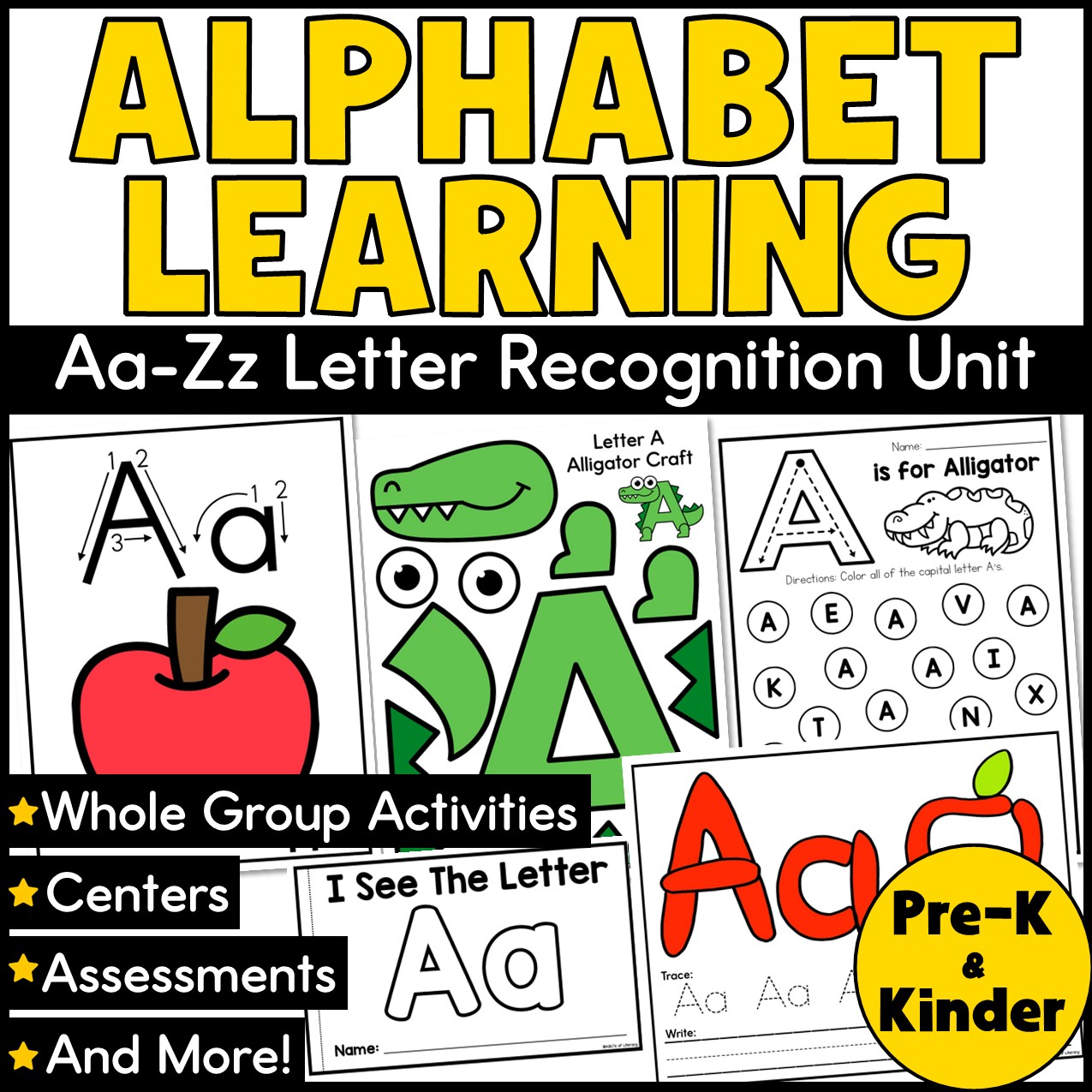
If you’re looking for an easy way to teach letter recognition all year long, this Letter Learning Activities Bundle includes everything you need to introduce, practice, review, and assess uppercase and lowercase letters.
With hands-on activities, literacy centers, whole-group lessons, and assessments, you’ll save planning time while giving your students meaningful alphabet practice.
Whether you’re introducing the alphabet for the first time or reinforcing previously taught letters, providing engaging, hands-on practice is one of the best ways to build confident readers.
The more opportunities children have to interact with letters, the stronger their letter recognition skills will become—and that foundation will support them as they move into phonics, decoding, and reading.
Pin It For Later:
Do you want to save this information for later? Pin this on Pinterest and it’ll be here for when you’re ready!